Stages of learning
From first letters to confident readers. These are the usual stages of school; the school will confirm which ones it runs.
-
01
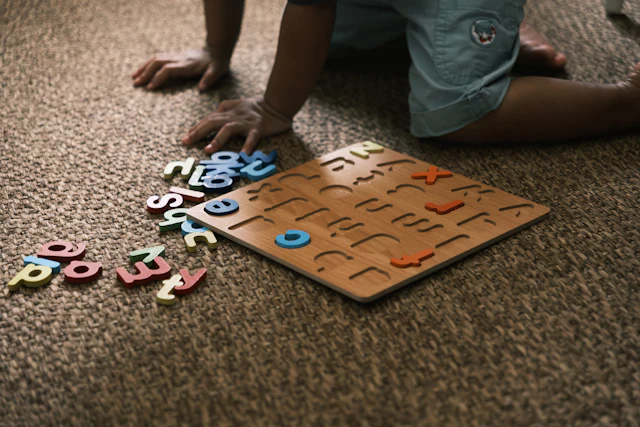
Letters become a game before they become words.Illustrative stock photo Pre-primary
Nursery, LKG and UKG. Usual age about 3 to 6 years (general guide)
Children learn through play, songs, stories and picture books. They start on first letters and numbers, hold a pencil, and get used to being part of a class.
To be confirmed. The public listings we found don't say whether the school has pre-primary classes.
Ask about Pre-primary -
02
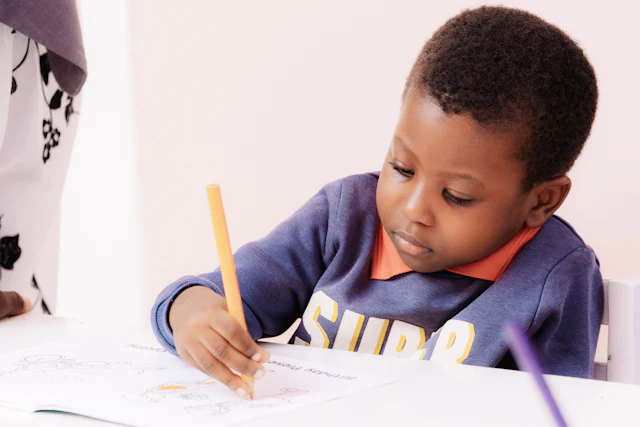
Careful lines today, neat handwriting later.Illustrative stock photo Classes 1 and 2
Class 1, Class 2. Usual age about 6 to 8 years (general guide)
Reading and writing in English and Hindi, number work and simple maths, environmental studies about home, family and neighbourhood, plus drawing, rhymes and games.
Justdial lists the school as a primary-level, co-educational school. The exact classes are to be confirmed by the school.
Ask about Classes 1 and 2 -
03
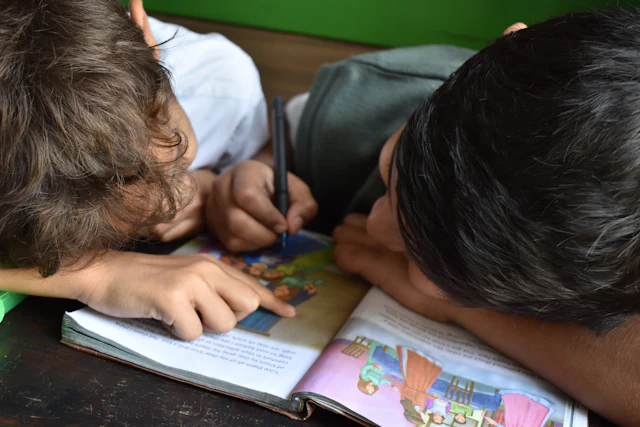
Reading together, pointing at every word.Illustrative stock photo Classes 3 to 5
Class 3, Class 4, Class 5. Usual age about 8 to 11 years (general guide)
Longer reading and writing, tables and problem solving, the world around us in more detail, and the habits that help in the bigger classes: homework, neat notebooks, asking questions.
Justdial lists the school as a primary-level school. The exact classes are to be confirmed by the school.
Ask about Classes 3 to 5 -
04
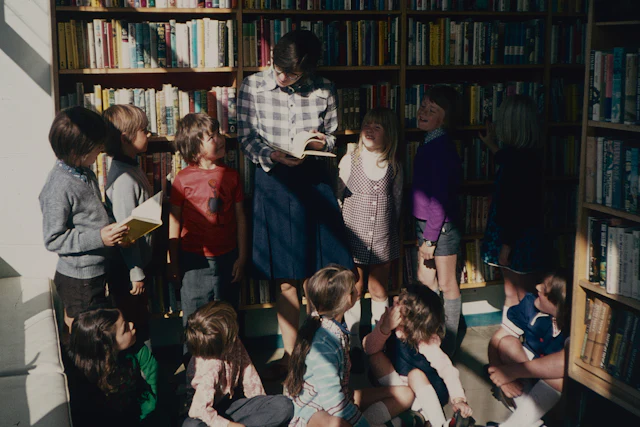
Bigger classes, bigger bookshelves.Illustrative stock photo Classes 6 to 8
Class 6, Class 7, Class 8. Usual age about 11 to 14 years (general guide)
If the school offers middle classes, subjects separate into science, social science, mathematics and languages, with more independent work.
To be confirmed. The listing we found shows primary level only, so the school will tell parents whether middle classes are offered.
Ask about Classes 6 to 8
How young children learn best
In general terms, good primary teaching moves from the concrete to the abstract: counting real objects before writing sums, talking about a story before writing about it, and practising a little every day. Short lessons, lots of repetition and a teacher who knows each child by name matter more at this age than any textbook.
This is a general description, not a claim about this school's curriculum.

- Board / affiliation
- to be shared by the school
- Medium of instruction
- to be shared by the school
- Subjects and books
- to be shared by the school
- Tests and report cards
- to be shared by the school
Take the first step.
Ask about a seat, a visit or the documents you'll need. The office can answer on the phone or on WhatsApp.
दाखिले की जानकारी के लिए कॉल करें या व्हाट्सऐप पर लिखें।